São João in Salvador: forró, June traditions and how the city celebrates
A local guide to São João in Salvador: the June festival cycle, forró, Pelourinho celebrations, traditional food, quadrilhas, samba junino, what to wear and how to plan your visit.
By Salvador Insider Editorial Team
Research, verification and editorial maintenance by Salvador Insider.

June in Salvador sounds different. Forró appears more often in bars, squares and cultural programmes, colourful bandeirinhas spread across streets and courtyards, and foods built around corn, peanuts, cassava, cakes and liqueurs become part of the seasonal landscape. The peak is São João, on June 24, but the celebration belongs to a much broader June cycle shared across Bahia and the Northeast.
The first thing to understand: São João is not one concert on June 24. In Salvador, the festive season builds through June and official programmes usually occupy several days, stages and neighbourhoods around the main date.
A June cycle, not a single night
The traditional June calendar revolves around three saints: Santo Antônio on June 13, São João on June 24 and São Pedro on June 29. In Bahia, those dates overlap with music, neighbourhood gatherings, religious devotion, food traditions and large public festivals. São João is the biggest reference point, but arriving before or staying after June 24 can still place you inside the festive season.
| Date | Celebration | What it means for a visitor |
|---|---|---|
| June 13 | Santo Antônio | The cycle is already active, with religious and cultural traditions around the city. |
| June 24 | São João | The main date, with the strongest concentration of forró, public celebrations and traditional food. |
| June 29 | São Pedro | Traditionally closes the saint cycle, although some events continue beyond the date. |
Why São João matters so much in the Northeast
The June festivals reached Brazil through Portuguese Catholic traditions and were reshaped here over centuries. In the Northeast they became much more than church dates: a season of music, dance, food, family gatherings, public festivals and symbols connected to rural life, harvests and regional identity. The result is not one uniform festival but many local versions that share a recognisable language of saints, bonfires, flags, food and dance.
That regional scale matters when talking about Salvador. The capital celebrates São João seriously, but the festival is not uniquely an urban Salvador phenomenon. Across Bahia, towns and cities turn June into one of their biggest cultural seasons of the year. Salvador gives international visitors an accessible way to experience that tradition without leaving the city, while the interior offers a different and often more immersive version of it.
The sound of June: forró
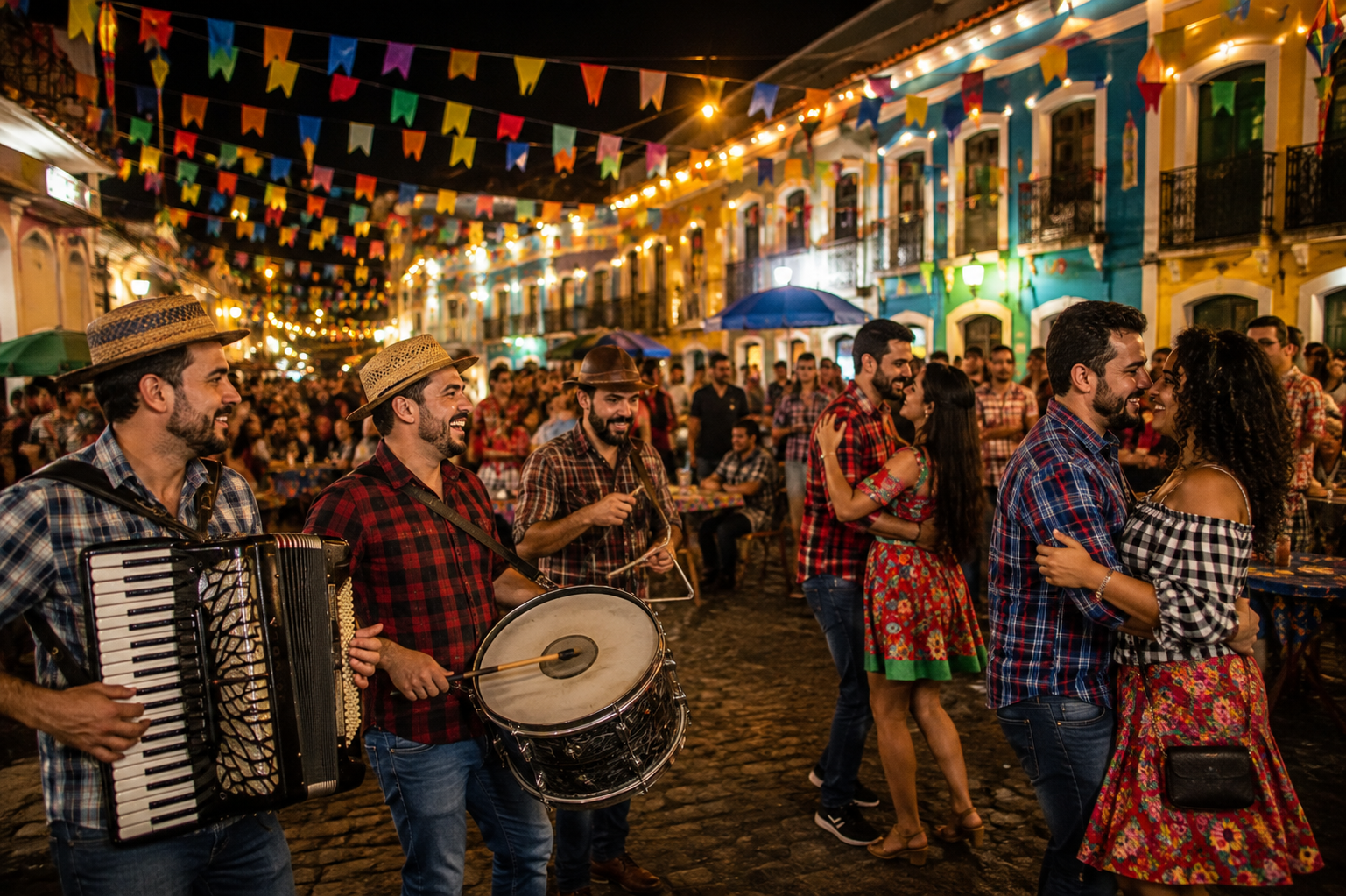
If Carnival has the trio elétrico, São João has the sanfona. Traditional forró is a broad musical world that includes baião, xote, xaxado, arrasta-pé and other forms. The classic trio de forró is built around accordion, zabumba drum and triangle. You will hear those instruments everywhere from small pé-de-serra sets to large stages with nationally known artists.
Brazil's heritage institute, IPHAN, recognised the Traditional Forms of Forró as Cultural Heritage of Brazil in 2021. In 2026, IPHAN described traditional forró as a cultural expression rooted in northeastern music and dance traditions and highlighted the accordion, zabumba and triangle trio as one of its central formations. For visitors, the useful point is simple: forró is not decorative soundtrack. It is one of the cultural languages through which the Northeast dances, remembers and tells stories about work, migration, love and home.

Where to experience São João in Salvador
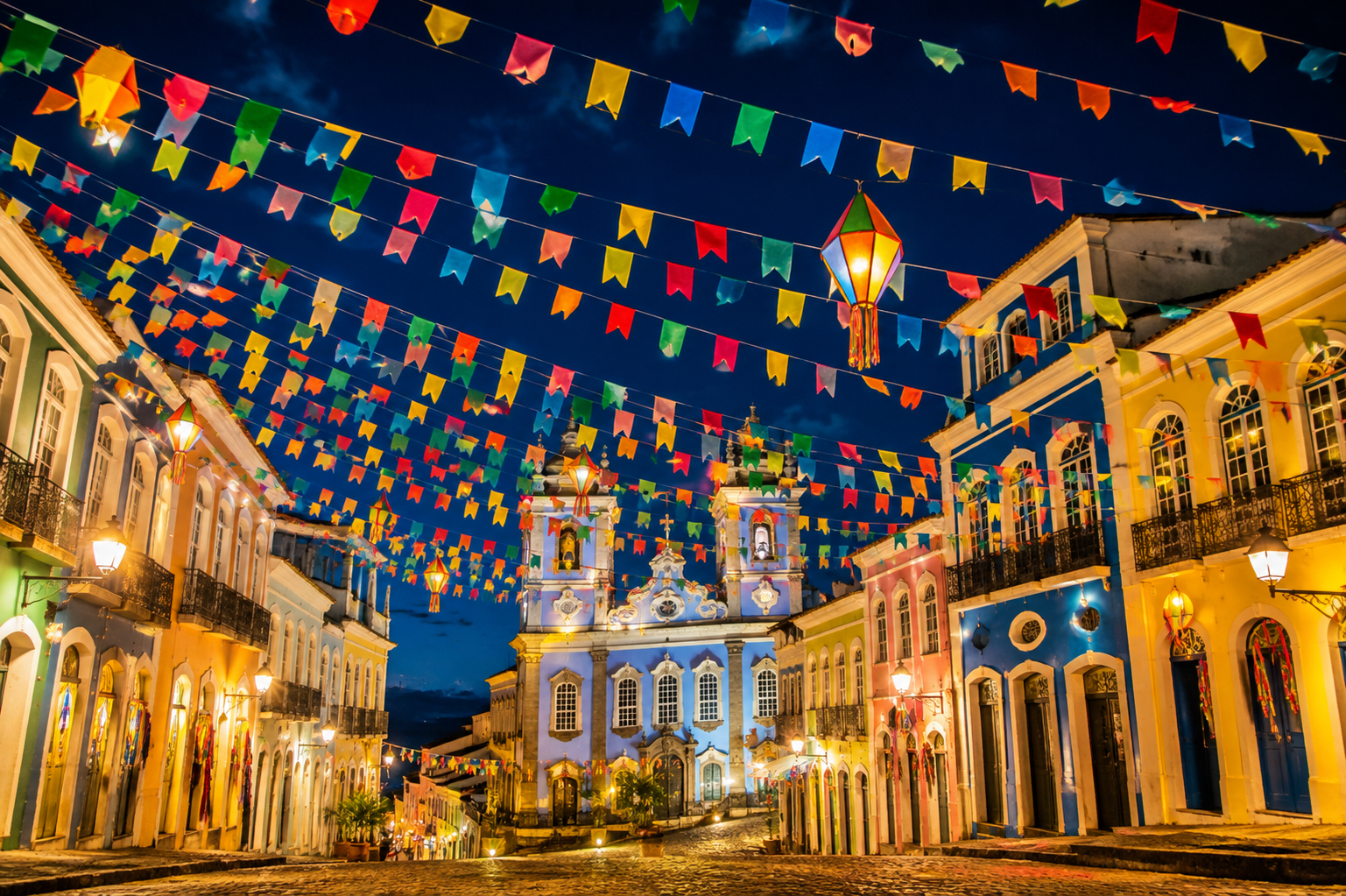
For a first-time international visitor, the Historic Center is the easiest place to understand the scale and visual language of Salvador's São João. Pelourinho is decorated with bandeirinhas and becomes a network of stages rather than a single concert venue. Largo do Pelourinho, Terreiro de Jesus and several squares and cultural spaces around the neighbourhood can operate simultaneously, with forró spreading through streets, courtyards and stages.
Carmo and Santo Antônio Além do Carmo form another important Historic Center axis, and recent editions have expanded official programmes into other parts of Salvador. In 2026, for example, state-supported festivities reached Pelourinho, Carmo, Santo Antônio Além do Carmo, Paripe, Periperi, Liberdade, Nordeste de Amaralina and Itapuã. That list describes one edition, not a permanent map. Check the current programme shortly before your trip.
In 2026, the opening night in Pelourinho alone placed more than 40 attractions across seven spaces. Use that as an example of how distributed the festival can be, not as a schedule to save for next year.
How Pelourinho feels during São João
The Historic Center is especially striking in June because festival decoration changes the space without hiding it. Rows of coloured flags cross colonial streets, lanterns and fabrics appear in squares, and music travels between stages. Unlike Carnival, where crowds often follow moving sound trucks, São João is more stationary and dispersed: you walk between stages, stop for food, dance, move to another square and repeat.
- Expect cobblestones and slopes. Comfortable shoes matter more than an elaborate festival outfit.
- Large public shows can become very crowded, especially around the night of June 23 and the main June 24 celebrations.
- Several stages can operate at once, so checking the programme before entering the Historic Center saves unnecessary uphill wandering.
- The atmosphere starts before the headline shows. Smaller forró groups, decorations and food are part of the experience, not merely things to pass on the way to a stage.
Quadrilhas juninas
Quadrilhas are choreographed group dances built around the theatrical vocabulary of the June festivals. They can include elaborate costumes, characters, staged weddings, narrative themes and months of rehearsal. Contemporary competitive quadrilhas are highly produced cultural performances, not simply tourists in checked shirts stumbling through a folk dance.
Salvador has its own strong quadrilha scene. Periperi, in the Subúrbio Ferroviário, is an important reference point and hosts the Bahia state championship. In 2026 the seventeenth edition opened there before the main São João dates. If a quadrilha competition or presentation appears in the programme during your visit, it is worth seeing precisely because it reveals a side of the festival that a concert-only itinerary misses.
A Salvador-specific tradition: samba junino
Salvador also adds something distinctly its own to June: samba junino, sometimes called samba duro. The movement developed more than four decades ago around June celebrations and terreiro communities in neighbourhoods such as Engenho Velho de Brotas, Fazenda Garcia, Tororó and Federação. In 2018 it was recognised as Intangible Cultural Heritage of Salvador.
This is one reason a Salvador São João should not be described as a smaller copy of an interior festival. The city participates in the wider northeastern tradition and also folds its own Black musical history into June.
What to eat and drink
June food is a major part of the festival, and corn does an unreasonable amount of work. In Salvador and Bahia you will see combinations of corn, peanuts, cassava and coconut in sweet and savoury forms, sold at public events, bakeries, markets, restaurants and family gatherings.
- Corn on the cob, boiled or roasted.
- Canjica and mungunzá, whose names and preparations can vary by region.
- Pamonha and corn cakes.
- Boiled peanuts, one of Bahia's most recognisable June snacks.
- Cassava or carimã cakes and other regional baked sweets.
- Paçoca, cocada and other peanut or coconut sweets.
- Liqueurs, especially jenipapo, a particularly Bahian June tradition.
A Salvador detail worth knowing is the traditional liqueur made by the Franciscan sisters at the Convento do Desterro. You do not need to build an expedition around obtaining a bottle, but it is a useful reminder that June food and drink here are tied to institutions, neighbourhoods and family traditions as much as to festival stalls.
Santo Antônio before São João
If you are in Salvador earlier in June, Santo Antônio Além do Carmo gives the calendar a more local scale. The traditional trezena of Santo Antônio leads up to June 13, with residents decorating homes and religious celebrations taking place in the neighbourhood. It is a quieter reminder that the June cycle existed long before festival stages and tourism campaigns arrived.
Should you leave Salvador for São João?
Not necessarily. If this is your first trip to Salvador and you want to combine São João with the city's museums, beaches, food and Afro-Brazilian culture, staying in the capital is completely legitimate. The Historic Center provides multiple stages, traditional music, food, quadrilhas and a strong visual festival atmosphere, and recent editions have expanded celebrations into several neighbourhoods.
If São João itself is the main reason for your trip, then spending part of the period in the interior can add another dimension. Places such as Amargosa, Cruz das Almas, Santo Antônio de Jesus and Senhor do Bonfim are recurring references in Bahia's June tourism. They require separate transport and accommodation planning, and popular destinations can fill early. Treat them as a different trip decision, not as a compulsory day trip from Salvador.
What to wear and bring
Checked shirts, floral dresses, straw hats and playful rural references are common at June parties, but there is no dress code for visitors. In Salvador, practical clothing wins. Historic Center cobblestones, crowds and the possibility of rain are more relevant to your evening than achieving perfect arraial cosplay.
- Comfortable shoes with good grip for cobblestones and slopes.
- A light rain layer or compact umbrella if the forecast calls for showers.
- A small secure bag worn close to the body.
- Only the valuables you genuinely need in a crowded public event.
- Your phone charged, with the programme and return route saved before you enter the busiest areas.
Getting around during the festivities
Major São João nights can change traffic around the Historic Center and around neighbourhood stages. Do not assume that a taxi or ride-hailing vehicle will reach the exact entrance of a crowded square. Save your accommodation address, agree on a meeting point if you are with other people and check that year's transport plan before leaving.
For a first São João in Salvador, staying in or near the Historic Center can make the festival nights much simpler. You still need normal big-city awareness, but you reduce the amount of late-night cross-city transport after the main shows.
A sensible first-time plan
- Check the official Salvador and Bahia São João programme in the week before your visit.
- Choose one main Historic Center zone for the evening instead of trying to chase every headline artist across several stages.
- Arrive before the biggest shows so you can see the decorations, eat and hear smaller forró groups while movement is easier.
- Try at least one traditional June food and, if you drink alcohol, a Bahian fruit liqueur such as jenipapo.
- If a quadrilha presentation is happening, make time for it. It explains the festival visually in a way a concert cannot.
- Dance. You do not need lessons, a costume or competence. São João has survived much worse coordination than yours.
- Decide how you are getting back before the crowd leaves the largest stages at the same time.
Frequently asked questions
- When is São João in Salvador?
- São João is celebrated on June 24, but Salvador's June festival programme normally extends across several days and may begin well before the main date. The broader cycle also includes Santo Antônio on June 13 and São Pedro on June 29.
- Where is the main São João celebration in Salvador?
- The Historic Center, especially Pelourinho and the Carmo/Santo Antônio axis, is the most practical reference for visitors. Official programmes can also be distributed across other Salvador neighbourhoods, depending on the year.
- Is São João in Salvador free?
- Many of the major public programmes and stages are free, but private parties and ticketed events also exist. Check the status of the specific event you plan to attend.
- What music will I hear?
- Forró is central, including baião, xote and arrasta-pé, alongside contemporary variations and other popular Brazilian music depending on the line-up. Salvador also has its own samba junino tradition.
- Do I need to wear a costume?
- No. Checked shirts, straw hats and colourful rural-inspired outfits are common, but visitors can wear normal comfortable clothes. Shoes suitable for cobblestones are much more important.
- Should I go to the interior of Bahia instead?
- Only if the June festival itself is a major purpose of your trip. Salvador offers a substantial and culturally legitimate São João experience. Interior destinations can be more immersive but require separate transport and accommodation planning.
Related reading

Music & Carnival
Salvador is a music city every month of the year, not only in Carnival week.

Bahian food guide
Dendê, coconut milk, dried shrimp and the sea: the grammar of Bahian cooking.

Where to Stay in Salvador: best areas for first-time visitors
Eight neighbourhoods, compared by beach, nightlife, history, restaurants and first-time suitability.