
February 2
Rio Vermelho
Festa de Iemanjá
Every February 2, Rio Vermelho becomes the centre of one of Salvador's most important Afro-Brazilian celebrations, with flowers and offerings carried to the sea in honour of Iemanjá.
Explore the festival
Discover Salvador
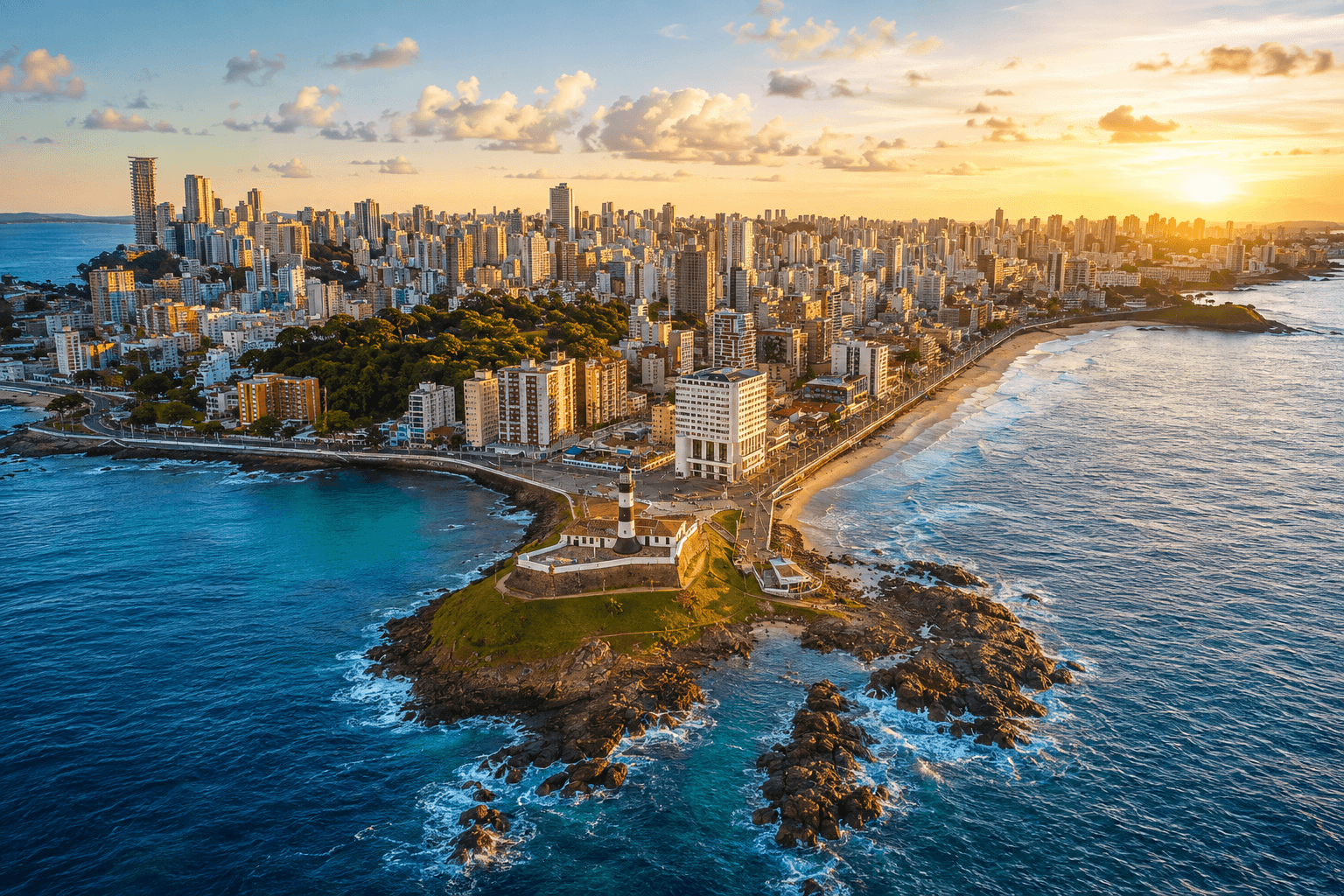
Salvador is the capital of Bahia, in northeastern Brazil, facing All Saints Bay and the Atlantic Ocean. It should not be confused with El Salvador, the Central American country. Founded in 1549 and Brazil’s first capital, Salvador remains one of the country’s most important centres of Afro-Brazilian culture.
Important dates
These are not just dates on a calendar. Each one changes how the city feels, moves and celebrates, and can shape the experience of an entire trip.
Rio Vermelho
Every February 2, Rio Vermelho becomes the centre of one of Salvador's most important Afro-Brazilian celebrations, with flowers and offerings carried to the sea in honour of Iemanjá.
Explore the festival

Street circuits
Carnival follows a movable calendar linked to Easter and usually falls in February or early March. Salvador's main street circuits fill with trio elétricos, blocos and enormous crowds.
Plan for Carnival

June festivities
São João is the main date in Bahia's June festival cycle, with forró, bonfires, colourful flags and traditional foods. The cycle also includes Santo Antônio on June 13 and São Pedro on June 29.
Discover São João
Planning around one of these dates? Accommodation and transport can fill up quickly, especially around Carnival and the busiest June festivities.
Explore
Salvador is the capital of Bahia, in northeastern Brazil, facing All Saints Bay and the Atlantic Ocean. It should not be confused with El Salvador, the Central American country. Founded in 1549 and Brazil’s first capital, Salvador remains one of the country’s most important centres of Afro-Brazilian culture.

How the city is laid out, what to prioritise on a short trip, and the mindset that makes Salvador click.
Read guide
Pelourinho is the famous heart, not the whole Historic Center. Walk the city from Sao Bento to Santo Antonio and watch Salvador change century by century.
Read guide
The museums, institutions and living practices that explain the city better than any postcard.
Read guide