Safety & Emergencies
Practical, non-alarmist safety habits plus the emergency numbers and preparation international visitors should have saved before going out.
Editorial team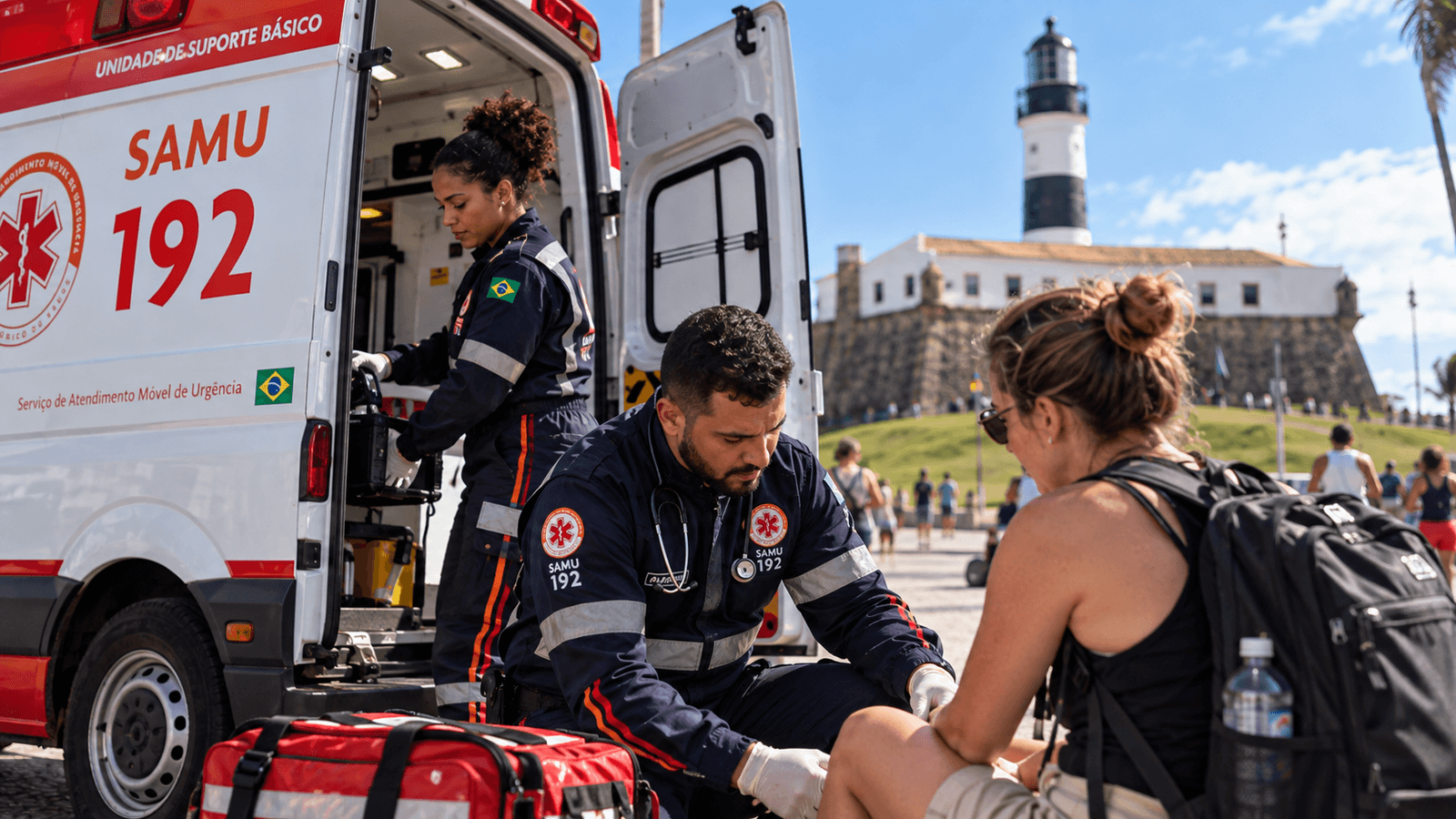
Salvador is a large city. Use the same habits you would use in other major urban destinations: keep valuables discreet, pay attention when using your phone in crowded public spaces, and decide how you will return before a late night out.
- At night, prefer door-to-door transport for journeys between neighbourhoods.
- Do not leave phones, bags or cameras unattended on the beach.
- Use identified transport and confirm the vehicle and driver in ride-hailing apps.
- Keep a copy of your passport, insurance information and accommodation address available offline.
Emergency numbers
| Number | Service |
|---|---|
| 190 | Police |
| 192 | SAMU medical emergency |
| 193 | Fire Department |
Healthcare for international visitors
According to Brazil's Ministry of Health, the public health services listed for travellers are free. Foreign tourists who develop a health problem can also seek care through the urgent-care network of Brazil's public health system, the Sistema Único de Saúde (SUS).
- SAMU 192: the mobile emergency service operates 24 hours a day, seven days a week. Calls to 192 are free from a local landline or mobile phone, and the service responds to urgent and emergency situations.
- UPA 24h: 24-hour urgent-care units treat acute clinical conditions and provide initial care for surgical or trauma cases. They stabilise patients, perform an initial diagnostic assessment and refer them to higher-complexity hospital care when necessary.
Related reading

Getting Around
Current fares, two-hour integration, metro maps and the stations visitors are most likely to use.
Read guide
Money & Payments
Real, cards, Pix and Brazil's very normal habit of splitting purchases into instalments.
Read guide