Cruises & Salvador Cruise Port
A practical guide for cruise passengers arriving in Salvador, with port basics, return-time rules and two six-hour routes beyond the usual Pelourinho loop.
Salvador Insider Editorial Team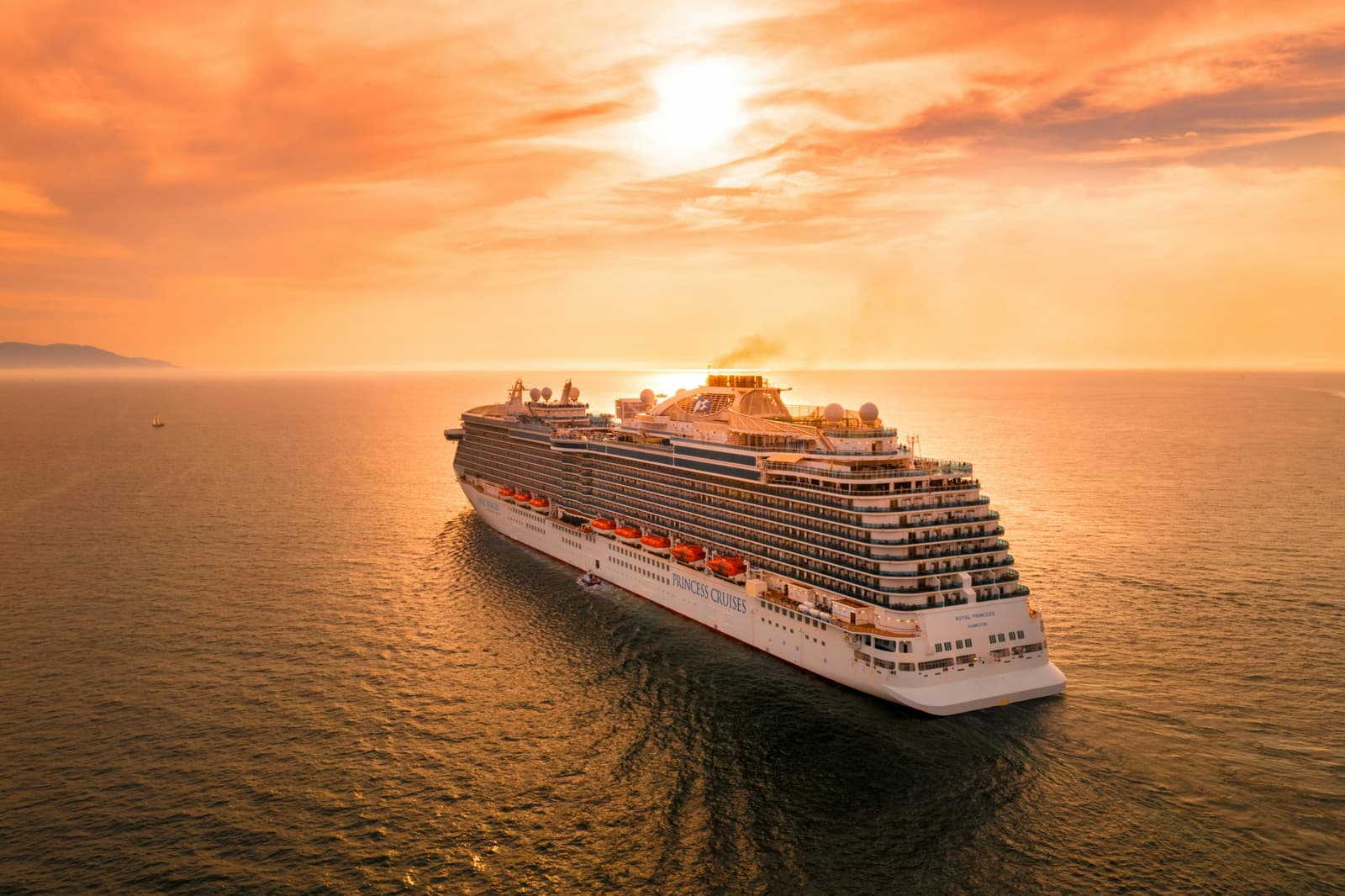
Salvador is one of Brazil's cruise ports where the city begins almost immediately after you leave the terminal. The maritime terminal sits in Comércio, in the Cidade Baixa, close to the Historic Center but also well positioned for routes through Itapagipe, Vitória and Barra.
The classic route is classic for a reason
If you arrive in Salvador by ship, the most predictable route is Port → Elevador Lacerda → Pelourinho → Port. A large share of your fellow passengers will probably do exactly that, and there is nothing wrong with joining them. It is practical, close to the ship, visually rewarding and extremely efficient if your priorities include the Historic Center and souvenir shopping.
But if you want to step outside that box, the two routes below trade shopping time for quieter streets, local neighbourhoods, museums, bay views and a stronger sense of everyday Salvador. Fewer souvenirs, perhaps. Better sensory memories, very possibly.
Route 1: Ribeira → Bonfim → Humaitá
This route crosses the Itapagipe Peninsula along All Saints Bay. It is a more everyday Salvador: residents on the waterfront, calm bay water, boats, religious history, tropical-fruit ice cream and one of the city's most rewarding views over the bay.
Start in Ribeira. Priorities first: ice cream.
Ribeira is a traditional working-class neighbourhood on All Saints Bay, historically linked to boats, calm-water beaches and the maritime life of the Itapagipe Peninsula. It is also home to two very different ice-cream stops that have become part of the neighbourhood's identity.
Sorveteria da Ribeira
The story begins in 1931, when an Italian merchant opened a pizzeria in Ribeira and served house-made ice cream to customers. The ice cream became more famous than the pizza, and Sorveteria da Ribeira was born. Tropical-fruit flavours remain its signature, alongside more familiar options and house creations.
This is a good moment to temporarily abandon chocolate and vanilla. Look for flavours such as mangaba, graviola, cajá or umbu. A warning from people who believe surprises should remain pleasant: umbu is distinctly tart. If citrus flavours are not your thing, move along with dignity.
Solar Amado Bahia and the Ice Cream Museum
A short distance away, Solar Amado Bahia turns an ice-cream stop into an architectural detour. The eclectic mansion was inaugurated in 1904, later protected by IPHAN and restored after years of abandonment. Today it houses the so-called Ice Cream Museum, with historical references to ice-cream making, while the complex also includes an ice-cream shop. The house itself is part of the attraction: dozens of rooms, decorative European references, a chapel, marble and richly restored interiors.
Next: the Basilica of Nosso Senhor do Bonfim
From Ribeira, continue to the Basilica of Nosso Senhor do Bonfim. You can walk, but with only a few hours ashore this is not an endurance event. The walk can take roughly 30–35 minutes at a brisk pace, so a ride-hailing car usually makes more sense when time matters.
Bonfim occupies a singular place in Bahia's religious and cultural life. The devotion grew in the 18th century and the church became one of Salvador's most important religious landmarks. But Bonfim is more than a beautiful Catholic basilica: promises, pilgrimages, ex-votos, the coloured fitinhas tied to the railings and the annual Lavagem do Bonfim all reveal how deeply the site is woven into the city's identity. During the Lavagem, Catholic devotion and Afro-Bahian religious traditions meet in one of Salvador's largest popular celebrations.
Finish at Monte Serrat and Ponta de Humaitá
Your final stop is the Forte de Nossa Senhora de Monte Serrat and the small lighthouse at Ponta de Humaitá. From this edge of the peninsula, the geography of Salvador opens up across All Saints Bay. You can see the bay entrance, parts of the city, Itaparica in the distance and, depending on your ship's berth, possibly your own cruise ship waiting across the water.
The walk from Bonfim is possible, but it can consume around twenty minutes you may prefer to spend looking at the bay. If time is tight, use a ride-hailing car, enjoy the view without watching the clock every thirty seconds, and then ride directly back to the terminal.
If you still have a comfortable buffer when you return to Comércio, you can always make a short visit to Pelourinho and secure the souvenir quota you were supposedly avoiding.
Route 2: Campo Grande → Vitória → Barra
The second route is completely different. Its main transport system is your own pair of legs. It crosses Campo Grande and the tree-lined Corredor da Vitória before descending toward Porto da Barra and Farol da Barra. It is less about collecting attractions and more about walking through a part of Salvador that residents use every day.
Start at Campo Grande
Begin at Campo Grande, officially Praça 2 de Julho, dominated by the Monument to the Independence of Bahia. From here, follow Avenida Sete de Setembro through the stretch known as Corredor da Vitória. The avenue is shaded by mature trees and lined with residential buildings, schools, cultural institutions and some of the city's grand historic properties, which makes the walk noticeably cooler and calmer than many exposed streets in the center.
Museum option 1: Museu Geológico da Bahia
The Geological Museum of Bahia holds more than 20,000 pieces across exhibitions on minerals, fossils, meteorites, gemstones and the geological history of the state. One of its best-known pieces is a replica of the Bendegó meteorite. The museum is free, but its regular hours currently begin in the afternoon: Tuesday to Friday, 13:00–18:00, and weekends, 13:00–17:00.
Museum option 2: Museu de Arte da Bahia
A little farther along the avenue is the Museu de Arte da Bahia, created in 1918 and the oldest art museum in the state. Its collections include fine and decorative arts, Bahian furniture, European and Asian porcelain, crystal and metalwork. Current regular opening hours are Tuesday to Sunday, 10:00–18:00.
At Graça and Vitória, choose your detour
When you reach Largo da Graça, the McDonald's is an absurdly effective landmark. Civilizations once navigated by stars; we have apparently progressed to golden arches. From here, you can continue toward the Mirante da Vitória beside the Igreja de Nossa Senhora da Vitória for a broad view over All Saints Bay, or turn into Rua da Graça toward the Museu de Arte Contemporânea da Bahia. If your ship schedule and the museum hours cooperate, do both.
The MAC Bahia is one of the city's newest major cultural institutions, focused on contemporary art and a more representative collection that gives greater space to artists from Bahia, women, Black and Indigenous artists and different identities. It adds a very different cultural stop to a route that otherwise unfolds mostly outdoors.
Then go downhill
Continue down Ladeira da Barra toward Porto da Barra. This is where the route changes character: the residential, shaded avenue gradually opens toward the water. From Porto da Barra, continue along the waterfront to Farol da Barra, with beaches, sports, vendors, historic buildings and everyday city life unfolding beside the bay and Atlantic.
How much can you realistically fit into six hours?
Treat both routes as frameworks, not checklists. Traffic, museum opening hours, time leaving the ship and your own walking pace can change the day. Pick the parts that matter most to you and protect the return margin first. A relaxed four-stop day is better than a six-stop sprint followed by an unscheduled study of your ship's stern disappearing into All Saints Bay.
2026/27 cruise season
CODEBA expects the 2026/27 season in Bahia to begin in Salvador on 7 October 2026 with World Odyssey. The authority projects about 179,000 passengers across the ports of Salvador and Ilhéus during the season. The first large conventional cruise ship currently scheduled for Salvador is MSC Divina on 12 November. These figures cover Bahia's CODEBA ports and should not be read as 179,000 passengers in Salvador alone.
Related reading

Getting Around
Current fares, two-hour integration, metro maps and the stations visitors are most likely to use.
Read guide
Safety & Emergencies
Big-city awareness, door-to-door transport at the right times, and three numbers worth saving.
Read guide
Salvador for first-time visitors
How the city is laid out, what to prioritise on a short trip, and the mindset that makes Salvador click.
Read guide