Acarajé in Salvador
A local guide to acarajé in Salvador: what is inside it, its cultural meaning, how to order it, the difference from abará and how Salvador actually eats it.
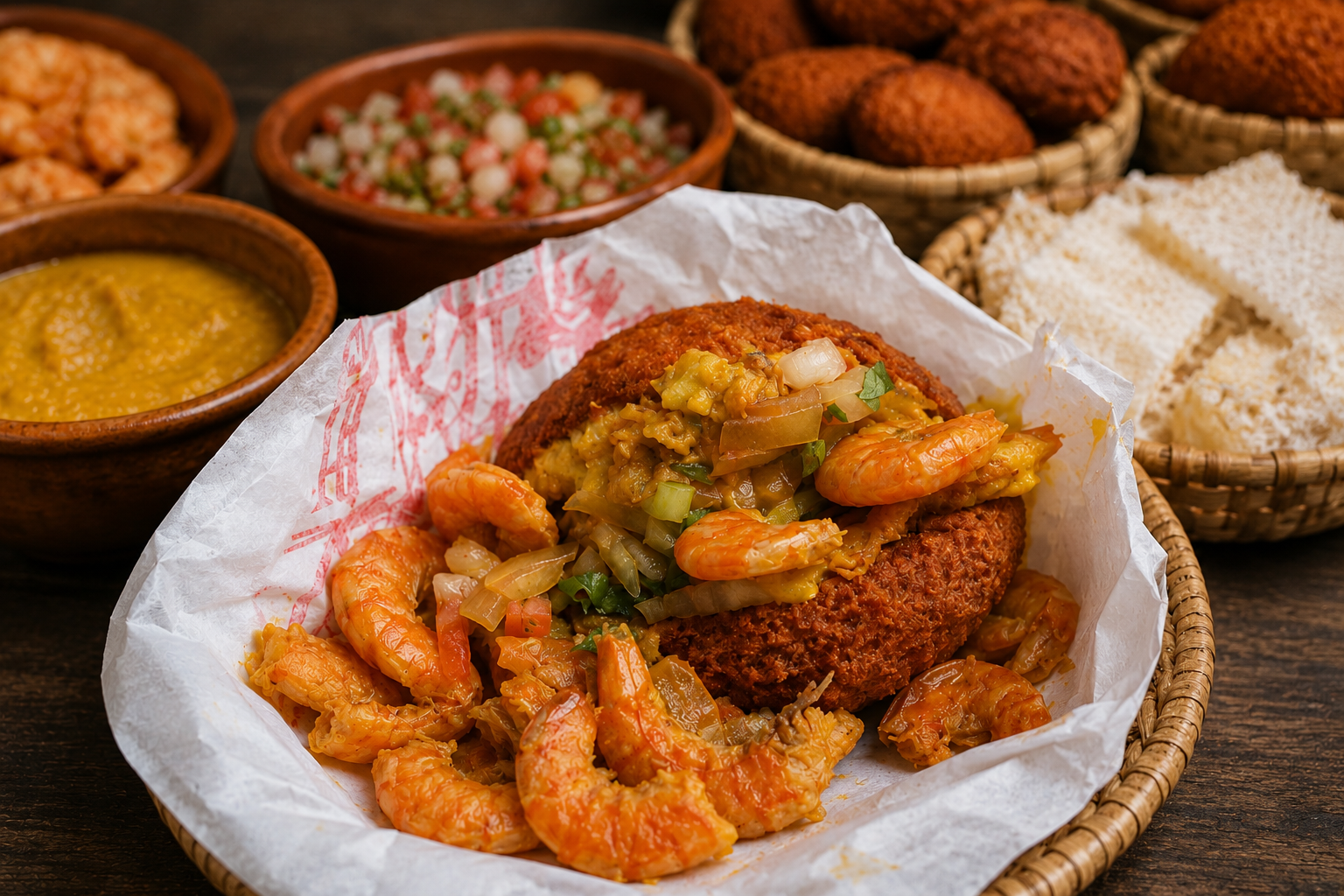
If Salvador had to introduce itself in one bite, acarajé would make a very convincing candidate. It is crisp, hot from the dendê oil, generous with its fillings and usually eaten with far less ceremony than its fame might suggest. You stop at a baiana's stand, decide what goes inside, negotiate the chilli situation and eat. Simple. Except that almost nothing about acarajé is actually simple.
A useful local comparison: acarajé is to Salvador what a hamburger is to many cities elsewhere — familiar, everyday and instantly recognisable. The similarity ends there.
So, what exactly are you eating?
The acarajé itself is made from black-eyed peas, onion and salt. The mixture is worked until light, shaped by spoon and fried in very hot dendê palm oil until the outside develops its unmistakable golden-orange crust. The cake is then opened and filled. A traditional complete acarajé can bring together vatapá, caruru, dried shrimp, salad and chilli sauce.
First one? Order it completo and ask for the chilli separately or say “sem pimenta”. You can always add heat. Removing it after the first bite would require technology humanity has not yet developed.
It is street food. It is also much more than that.
The craft of Bahia's acarajé women — the Ofício das Baianas de Acarajé — has been registered by IPHAN as Intangible Cultural Heritage of Brazil since 2005. The tradition connects food, work, family, Afro-Brazilian religion, clothing and knowledge passed through generations. Acarajé itself has roots in the Gulf of Benin in West Africa and arrived in Brazil with enslaved Africans from that region.
That is why reducing the baiana to someone selling a famous snack misses half the story. Her tabuleiro is a workplace, a family livelihood and, in many cases, the continuation of a tradition inherited from mothers and grandmothers. The person behind it is part of the experience, not part of the scenery.
Want a photo of a baiana or her stand? Ask first. It takes two seconds and avoids treating someone at work like a tourist prop.
Meet the tabuleiro
A baiana's stand is not an acarajé vending machine. Look around the tabuleiro and you may find an entire small catalogue of Bahian food. What is available varies from one baiana to another, but these are names worth recognising:
- Abará — a close relative of acarajé, made with black-eyed peas but steamed in banana leaf instead of fried in dendê.
- Vatapá — a rich, creamy preparation commonly used as one of the acarajé fillings.
- Caruru — an okra-based preparation with deep culinary and religious significance in Bahia.
- Dried shrimp — one of the most recognisable traditional toppings.
- Bolinho de estudante — a sweet cassava and coconut fritter rolled in sugar and cinnamon.
- Cocadas and other sweets — because apparently stopping after the acarajé would be an unreasonable display of restraint.
There is no single Salvador acarajé
Two baianas can start from the same basic idea and serve noticeably different acarajés. One may be crispier, another softer inside. The cake may be larger or smaller; the shrimp may change; one salad becomes someone's favourite while another baiana leaves salad out altogether. That is not inconsistency. It is part of why locals have favourite tabuleiros and why trying acarajé once does not mean you have tried Salvador's acarajés.
Acarajé or abará?
If dendê-fried food feels like a bold opening move, meet abará. It belongs to the same culinary universe but is steamed in banana leaf, giving it a softer texture and a different flavour. Visitors often arrive knowing the word acarajé and completely overlook abará. Salvador sees no reason for you to make that mistake.
How Salvador actually eats it
Acarajé is part of ordinary city life. Many traditional stands become especially active from late afternoon into the evening, although opening times vary. People stop on the way home, meet friends around a square or make acarajé the first stop of a night out. You may also see a large acarajé opened on a plate and shared over a beer. Nobody is conducting a tasting ceremony. They are having acarajé.
The pepper question
There is an old Salvador joke in which the baiana asks whether you want your acarajé “quente ou frio?” — hot or cold. She is not talking about temperature. Traditionally, quente means plenty of chilli and frio means little or none. The joke is much less universal today, but it survives well enough that first-time visitors should know it. If you do not enjoy serious heat, just say “sem pimenta” and remove all ambiguity.
| Say this | What it means |
|---|---|
| Um acarajé completo, por favor. | One acarajé with the traditional fillings. |
| Sem pimenta, por favor. | No chilli, please. |
| Pouca pimenta. | Just a little chilli. |
| A pimenta pode vir separada? | Can the chilli come on the side? |
Choosing where to try acarajé
This guide explains acarajé, the baiana's craft and how to order it. Our current named tabuleiro recommendations are kept in the central Where to Eat guide, where Cira, Dinha and Regina can be compared alongside the rest of Salvador Insider's food recommendations without duplicating venue information across the site.
Want the story before the first bite?
The Memorial das Baianas de Acarajé, in the Historic Center, is dedicated to the history, material culture and knowledge surrounding the craft. It is a useful stop if you want the white clothing, the utensils, the tabuleiro and the religious and social history to make sense before you meet them on the street. Then go eat. Museums are educational; dendê is persuasive.
Frequently asked questions
- Is acarajé always spicy?
- No. The chilli is optional when the acarajé is assembled. Ask for “sem pimenta” or request the sauce on the side if you want to control the heat yourself.
- Can vegetarians eat acarajé?
- The fried black-eyed pea cake itself does not require meat, but traditional fillings such as vatapá and caruru can contain dried shrimp. Ask specifically what is in the fillings before ordering.
- What is the difference between acarajé and abará?
- Both belong to the same Afro-Bahian culinary tradition and use black-eyed peas. Acarajé is fried in dendê oil; abará is steamed in banana leaf, which changes both texture and flavour.
Related reading
Bahian food guide
Dendê, coconut milk, dried shrimp and the sea: the grammar of Bahian cooking.
Street food
The most important meal in Salvador is often bought standing up.
What to eat in Salvador
If you only have a few meals, spend them like this.